
 Image 1 of 2
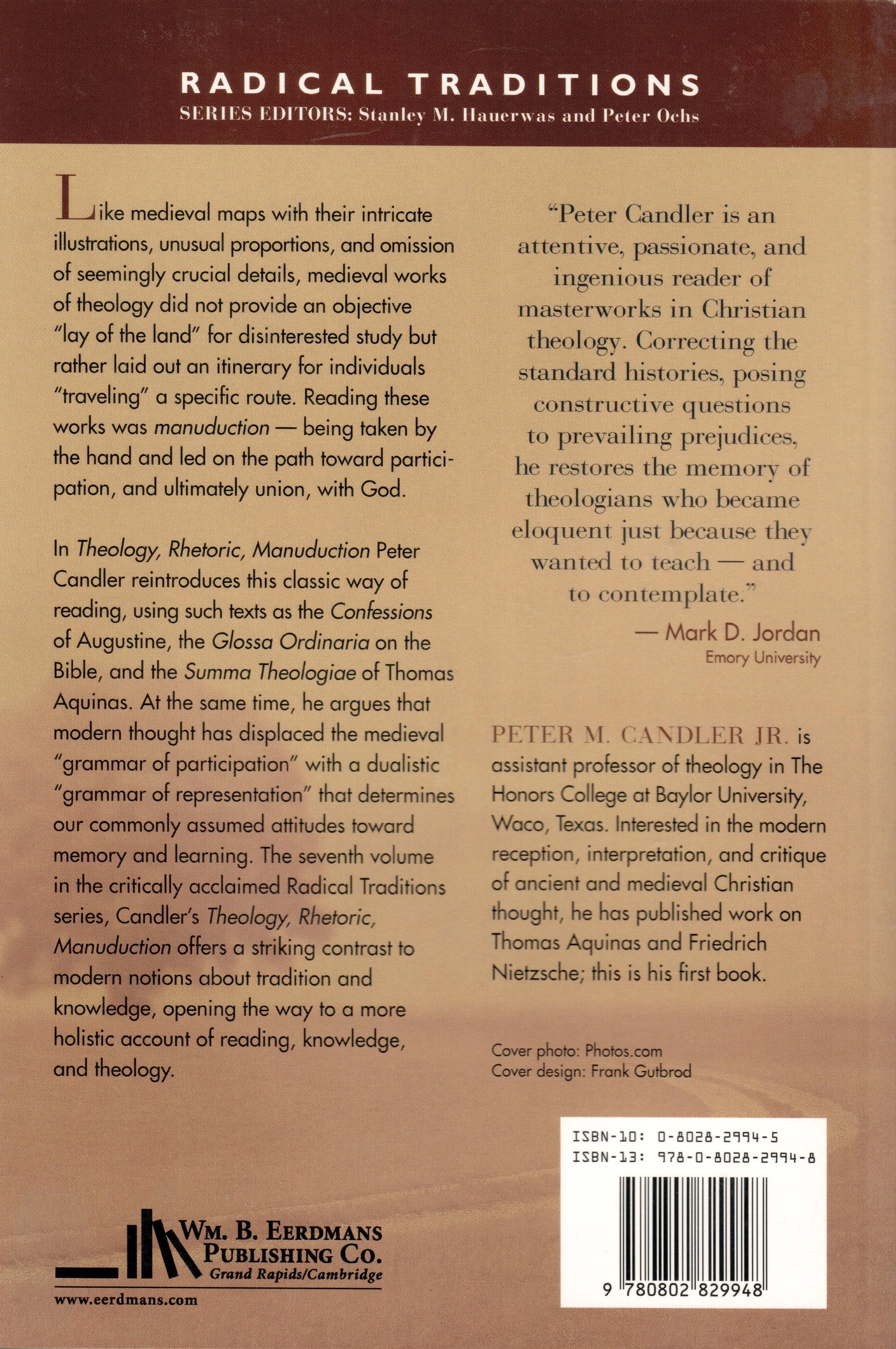 Image 2 of 2
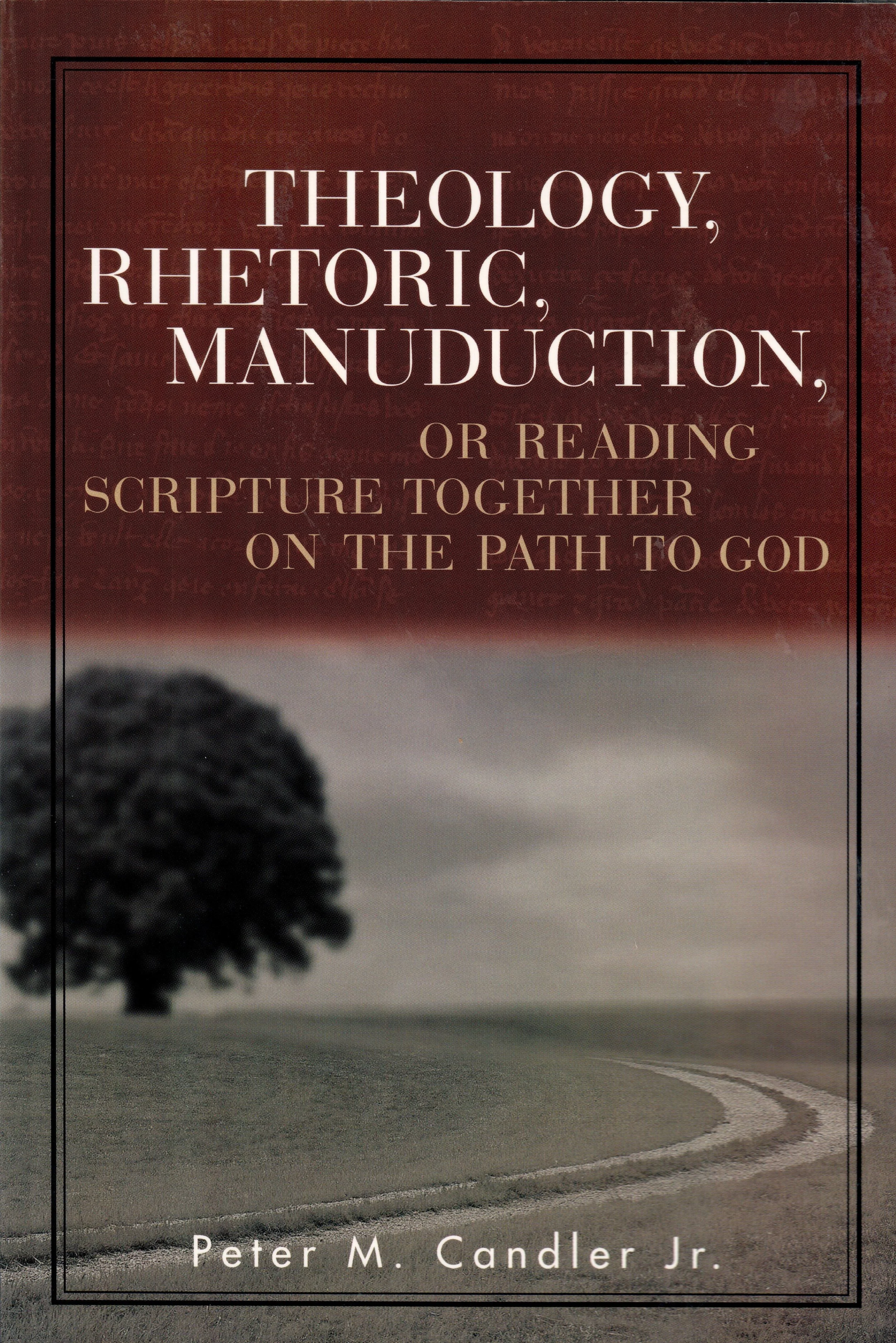
In Theology, Rhetoric, Manuduction, Pete Candler re-reads a number of medieval texts as vehicles not for the transmission of data, but for the leading of readers to contemplation of God. Like medieval maps with their intricate illustrations, skewed proportions, and omission of what today would be considered crucial details, medieval works of theology were designed not to represent an objective overview for disinterested study, but to provide an itinerary for travelers along a specific route. To read was to be taken by the hand, in a process known in earlier ages as “manuduction.” In TRM, Candler is recovering this understanding of reading and doing theology, and illustrates how it can enrich our present understanding both of great works of medieval thought and of scripture itself. He traces the modern understanding of scripture to the invention of printing in the 16th century and the transformation of the Bible from a performed text in communal liturgical worship and to a privately-owned physical object. He then examines Augustine's understanding of rhetoric through a close reading of the Confessions, and then reads two texts — the 12th-century Glossa Ordinaria and the Summa Theologiae of St. Thomas Aquinas — in terms of the concepts of memory and itinerary. The former is an “iconic illustration of the mutual indwelling of Christ and the Church,” and the latter a “curriculum of persuasion” which leads readers “by the hand” along a path towards union with God.
“Peter Candler is an attentive, passionate, and ingenious reader of masterworks in Christian theology. Correcting the standard histories, posing constructive questions to prevailing prejudices, he restores the memory of theologians who became eloquent just because they wanted to teach — and to contemplate.”
— Mark D. Jordan
Harvard Divinity School
In Theology, Rhetoric, Manuduction, Pete Candler re-reads a number of medieval texts as vehicles not for the transmission of data, but for the leading of readers to contemplation of God. Like medieval maps with their intricate illustrations, skewed proportions, and omission of what today would be considered crucial details, medieval works of theology were designed not to represent an objective overview for disinterested study, but to provide an itinerary for travelers along a specific route. To read was to be taken by the hand, in a process known in earlier ages as “manuduction.” In TRM, Candler is recovering this understanding of reading and doing theology, and illustrates how it can enrich our present understanding both of great works of medieval thought and of scripture itself. He traces the modern understanding of scripture to the invention of printing in the 16th century and the transformation of the Bible from a performed text in communal liturgical worship and to a privately-owned physical object. He then examines Augustine's understanding of rhetoric through a close reading of the Confessions, and then reads two texts — the 12th-century Glossa Ordinaria and the Summa Theologiae of St. Thomas Aquinas — in terms of the concepts of memory and itinerary. The former is an “iconic illustration of the mutual indwelling of Christ and the Church,” and the latter a “curriculum of persuasion” which leads readers “by the hand” along a path towards union with God.
“Peter Candler is an attentive, passionate, and ingenious reader of masterworks in Christian theology. Correcting the standard histories, posing constructive questions to prevailing prejudices, he restores the memory of theologians who became eloquent just because they wanted to teach — and to contemplate.”
— Mark D. Jordan
Harvard Divinity School